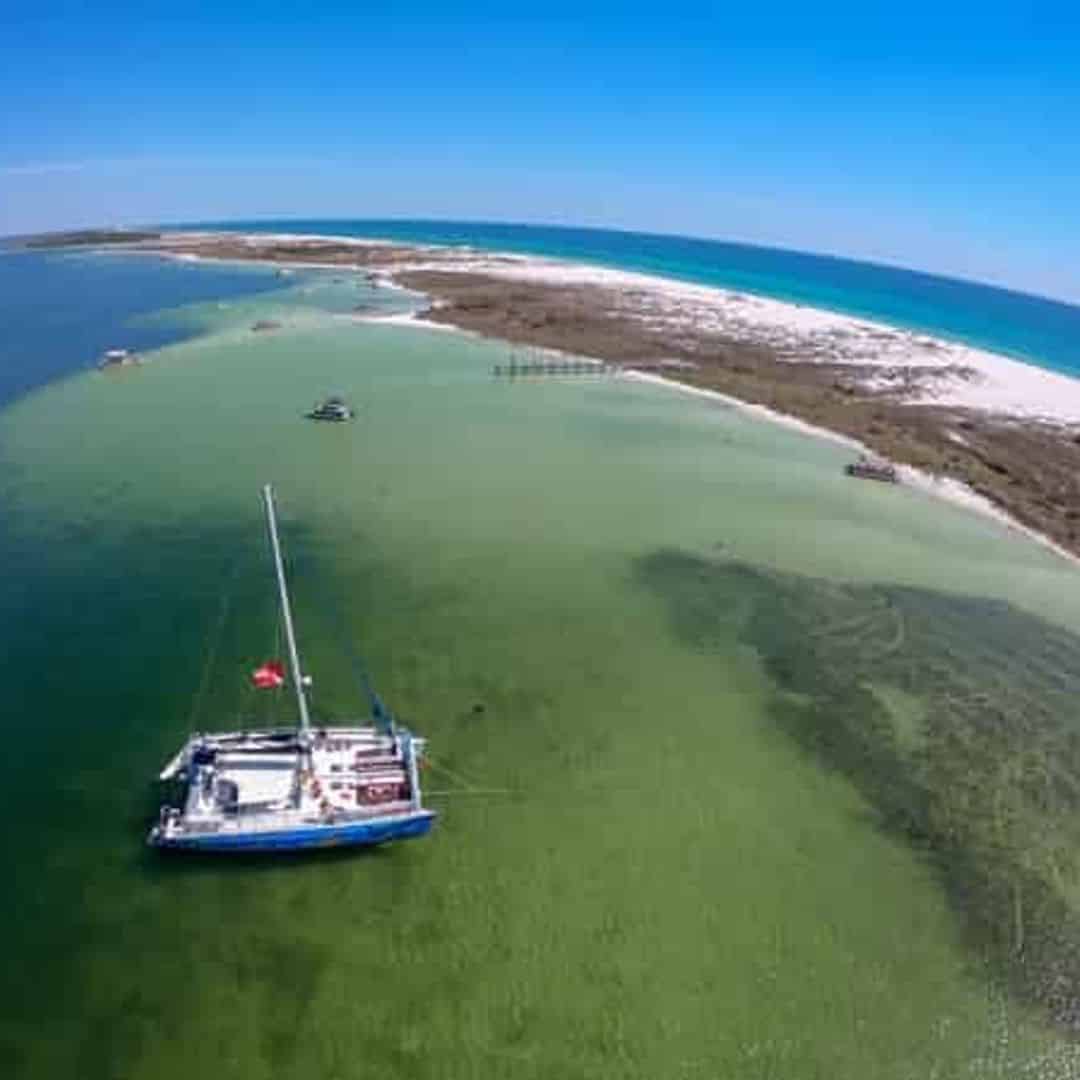
We’ve provided several answers to questions related to Panama City Beach Shell Island Tours & Activities , see some other helpful Q&A related to this product.
-
Question: If I’m going with older family members, is there any part of the landing area that’s easier to access without walking far?
Answer:
At Shell Island, there are easier access spots for older family members. Most of the time, captains try to get as close as they safely can to a flatter, more gradual stretch of shoreline so people are not jumping into deep water or walking far through waves. The landing area is usually shallow, so it is more like stepping down into knee deep or waist deep water and then a short walk onto sand rather than anything steep or difficult. That part is manageable for most people as long as they are steady on their feet. Where it gets easier or harder is what happens after that initial drop off. The closer you stay to the main landing zone, the less walking is involved, and that is typically where groups with mobility concerns will set up. If you move farther down the beach, it spreads out, and you get more space, but that also means you are walking more on soft sand, which can be tiring for someone who does not want to go far.
-
Question: Do the bugs ever become an issue on the island during certain times of year?
Answer:
Out at Shell Island, bugs are not something that takes over the day, but there are a few times of year when you notice them. On most bright, breezy beach days, the constant airflow coming off the water keeps things pretty comfortable, and you do not really think about insects at all. Where people tend to notice bugs a bit more is on still, humid days, especially in late spring through early fall when everything is warmer, and there is less wind moving across the sand. Around sunrise or closer to sunset, you might get some no see ums or small biting flies in certain pockets, usually closer to the dune line or any areas with a little vegetation. It is not the whole island, more like little areas that come and go depending on where you are standing. Most visitors do not end up dealing with bugs in a major way, especially if they are out near the water where the breeze is strongest.
-
Question: If I want to bring a small Bluetooth speaker, can I do that fine or do most people keep it quiet out there?
Answer:
A small Bluetooth speaker is generally fine, but the scene out there is more on the quiet, relaxed side than a party beach. You will hear a mix depending on the day, but most groups tend to keep the music low or just skip it altogether because people spread out and the sound carries easily over the water. What usually happens is a few groups will play something softly at their setup, and as long as it is not blasting or spilling over into everyone else’s space, nobody really cares. The unwritten rule is more about being aware of your surroundings. If it is a busy weekend and you are near other families, keeping it low goes a long way because people are there for swimming, shelling, and just kind of enjoying the water sound. If you walk a bit farther down the shoreline and find a more open stretch, you will see that people naturally give each other space, and that is where music tends to feel less intrusive. Captains do not enforce anything unless it becomes disruptive, so it is about etiquette than strict rules.
-
Question: How do captains usually handle weather changes mid trip if the wind starts picking up while everyone is already on the island?
Answer:
Captains are tuned in to how fast Gulf weather can shift, so they are not just reacting last minute. They are watching conditions the whole time, from before you even leave the dock. If the wind starts picking up while everyone is already on the island, the first thing they usually do is start communicating return timing early instead of waiting. You will hear them come around or make announcements telling people the wind is building and giving a slightly earlier heads up than planned so nobody is scrambling at the last second. If it is just a normal afternoon wind increase, they just adjust the return ride, maybe slow things down a bit on loading or shift the pickup spot to a more sheltered side so the boat is easier and safer to board. They will also time departures so groups are not getting slammed by the roughest chop at the same moment. If the weather actually starts turning stronger, like sustained wind or storm activity, they will sometimes shorten the stay and pull everyone back sooner.
-
Question: If I’m sensitive to motion on boats, which route tends to feel smoother, the bay side or going straight out through the pass?
Answer:
If you are sensitive to motion, the bay side route is going to feel smoother when you are heading out to Shell Island. The bay is more protected, so the water there tends to stay flatter with shorter, gentler movement. It feels more like a steady glide with occasional light bumps from other boats rather than a constant rolling motion. Once you go straight out through the pass toward the Gulf side, that is where you start feeling more open water influence. Even on good weather days, you can get a bit more up and down movement because you are mixing tides, boat traffic, and deeper water that reacts more to wind. Captains know this well and will adjust speed when someone looks uncomfortable, which helps a lot, but the route itself still matters. The pass is also where you are more likely to feel that quicker, sharper motion if the wind picks up, while the bay tends to stay more forgiving even when conditions are not perfect. If you are trying to make it as easy as possible on your stomach, sitting toward the middle or back of the boat on a bay side run helps even more because it reduces the bounce you feel compared to the front.
-
Question: If I’m bringing a group that doesn’t all swim well, are there still shallow areas where people can comfortably just stand and relax?
Answer:
There are shallow areas where people who are not strong swimmers can still enjoy the water. A lot of the shoreline where the shuttle drops you off starts off very gradual, so you can walk out quite a bit and still be in knee to waist deep water for a good stretch, depending on tide and where the boat anchors that day. That is usually where families gather because it feels calm and easy to stand, chat, and let kids splash around without anyone needing to fully swim. What helps is that the water stays clear most days, so you can actually see the sand under your feet, which makes people feel more comfortable even if they are not confident swimmers. If you move a little farther down the beach, you will still find similar shallow pockets, especially on the bay side, but it just spreads out more and feels less clustered. There are also little sandbar type areas that pop up where the water can stay shallow for a decent distance.
-
Question: Is there a difference in experience between going on a pontoon vs a larger tour boat when visiting Shell Island?
Answer:
Yes, there is a difference, and it comes down to how you want your day at Shell Island. On a larger tour boat, the experience is more structured. You are usually on a set schedule, you leave with a group, and the captain decides where everyone stops and how long you stay. The ride itself is usually smooth and relaxing, and you tend to get dropped off in a common area where everyone else is. You just get on, enjoy the ride, and go with the flow. A pontoon is different. You control when you leave, where you anchor, and how long you stay in each spot. The tradeoff is that you are doing a bit more of the work, like handling anchoring, watching weather, and staying aware of boat traffic around you.
-
Question: Do you usually have cell service out there or should I expect to be completely disconnected the whole time?
Answer:
Out on Shell Island, you should expect cell service to be kind of hit or miss rather than something you can rely on the whole time. When you are closer to the mainland or still in the pass on the way out, most phones will usually pick up a decent signal, but once you are actually out on the island and especially if you walk a bit away from where the boats drop off, it can drop down to one bar or disappear completely depending on your carrier. Verizon tends to hold up a little better out there, AT and T is usually okay but inconsistent, and T-Mobile can get pretty spotty once you are fully on the island. It also changes a bit day to day based on how many people are out there and how your phone is bouncing off towers across the water.
-
Question: If I’ve never been on a boat in the Gulf before, is the ride to Shell Island something most first timers handle fine?
Answer: For most people heading out to Shell Island for the first time, the boat ride is pretty manageable, even if you have never been on the Gulf before. The route is short, usually around 15 to 30min depending on where you launch from, and a lot of it is in protected or semi protected water like the bay and the pass rather than straight open ocean the whole way. That makes a big difference because you are not dealing with long stretches of deep rolling swells like you would offshore fishing. On calmer mornings, it can feel almost smooth, and on windier afternoons, you might get a bit more chop once you get closer to the open Gulf side, but captains usually adjust speed and route to keep things as comfortable as possible. If you are someone who gets a little uneasy on boats, sitting toward the middle or back helps a lot since it reduces the bounce you feel compared to the front. Most shuttles are used to families, kids, and people who are brand new to boating, so they are not running fast or aggressively.
-
Question: How far offshore are you usually when you start seeing dolphins around the Shell Island route?
Answer: When you are heading out toward Shell Island you can start seeing dolphins pretty close to shore in the right conditions, sometimes just a few minutes after leaving the marina, but most of the reliable sightings tend to happen once you are roughly 10 to 20min into the ride and moving through the deeper channels or passes. That is usually where baitfish stack up and the water movement is stronger, so dolphins will cruise those edges looking for food. You do not have to be far offshore in the deep Gulf or anything like that, a lot of what people see happens in pretty shallow water zones between the harbor entrance and the island itself. On calmer mornings it is not unusual to see them right near the boat lanes following along or surfacing in small groups, almost like they are moving with the traffic. If the tide is running or there is a lot of bait in the water, they can show up even closer in, sometimes almost within sight of the docks before you fully head out. On busier or windier days they might spread out more, so sightings feel a bit more spaced apart and you catch them farther along the route rather than right at the start.
-
Question: Do you ever get spots where the water suddenly gets deeper a few steps from shore or is it gradual the whole way out?
Answer: It is mostly a gradual slope when you are stepping into the water, so for the first stretch it usually feels pretty predictable and easy, especially on the bay side where the shuttle drops people off. You will typically walk out a decent distance and still be in waist to chest deep water without any sudden drop offs, which is why it feels so comfortable for families and casual swimmers. That said, it is not perfectly uniform the whole way along the shoreline. There are little channels and cut through areas that shift with tides and sand movement, and in those spots you can take a few steps and notice it gets deeper a bit quicker than the surrounding areas. It is not usually a dramatic cliff style drop, more like a soft dip where the sand slope changes and you go from knee deep to chest deep faster than expected. You will see that more on days after wind or boat traffic has stirred things up, or closer to the open Gulf side, where the underwater sand patterns are less consistent.
-
Question: How noticeable are boat wakes near the swimming areas during busy weekends?
Answer: Boat wakes on busy weekends are definitely noticeable, but it depends a lot on where you end up setting up for the day. Right near the shuttle drop off spots or anywhere close to the main channels, you will feel the water rocking regularly because boats are constantly coming and going, especially mid morning through early afternoon when traffic is steady. It is not usually dangerous or anything like that, but it can turn calm swimming into more of a bobbing in place kind of feel for a few minutes at a time when a group of boats passes through. If you walk just a short distance down the beach, even 5 to 10min, it usually quiets down a lot because you are farther from the direct traffic lanes and the wakes have already spread out and softened before they reach you. On the bay side, it feels more controlled, while areas closer to open pass traffic feel a bit more movement. The water still stays very swimmable, it just has those rolling pulses throughout the day that remind you you are in an active boat corridor.
-
Question: Is it realistic to expect good shell collecting?
Answer: Out at Shell Island, it is realistic to find shells, but it is not one of those guaranteed treasure hunt situations every time you step off the boat. The good shell collecting depends on what has been happening with wind, tides, and how recently a lot of people have been through the same stretch. After a storm or a strong tide shift, you can absolutely walk into pockets where you find nicer, more intact shells, especially if you get a bit away from where the shuttle drops everyone. On normal calm days, though, especially in peak summer, you will still see shells, but a lot of them are already picked over near the main landing area, so it becomes more about walking and being a little patient rather than just spotting them right at your feet. The farther you drift down the shoreline, the better your odds usually get, since less foot traffic means more pieces left behind. Early morning trips also tend to be better simply because fewer people have walked through yet.
-
Question: Do jellyfish ever show up around Shell Island in certain months?
Answer: Around Shell Island, you can run into jellyfish at certain times of year, but it is not something that is constant every day or every trip. The most common ones people notice are the smaller, clear moon jellies, and then occasionally the more uncomfortable ones like sea nettles or even Portuguese man o war drifting in from offshore currents. The timing really depends on wind direction, water temperature, and what has been moving through the Gulf that week. Late spring into early fall is when you are more likely to hear people talking about them, especially after a few days of steady onshore wind that pushes warmer surface water in. After storms or when the Gulf gets stirred up, they can show up more in patches, and then a few days later, it can look completely normal again. Most of the time, they are not everywhere, it is more like pockets where a few drift in together, and then the next stretch of beach looks totally clear.
-
Question: If we go during peak summer, how early do you really need to arrive to avoid waiting in a long line for the shuttle?
Answer: Most regulars will aim to arrive about 45min to 1hr early, and on the busiest July and August weekends, some even push closer to 1.5hrs just because parking lots near the marina can slow down fast once mid morning hits. That extra time is more about giving yourself breathing room for check in, bathrooms, loading gear, and not feeling rushed when the dock starts filling up. If you are going out on one of the first morning shuttles, you can sometimes get away with arriving a little closer to 30min early since things are still moving steady, but once you get into late morning through early afternoon, that window tightens quickly.
-
Question: Are dolphins something you almost always see on the way out there or is it more of a lucky timing thing?
Answer: On the ride out to Shell Island dolphins are pretty common, but I would not ever call it a guaranteed thing like clockwork. It is more of a good odds situation than a sure sighting. Most days in warmer months, you have a decent chance of seeing them somewhere along the pass or just outside the harbor because they like following baitfish through those channels, especially early morning when the water is calmer and boat traffic is lighter. Some trips, you will see a pod within 10min of leaving the dock, and it feels like they are everywhere, other days, you might ride all the way out and only catch a quick glimpse of a fin in the distance. It really comes down to timing, tide movement, and how much bait is moving through the area that day. Captains know the spots they tend to hang around, so if they are around and visible, they will slow down and point them out or circle briefly so everyone can get a look. Windy afternoons and busier boat traffic can make sightings a little less frequent just because the water gets choppier and dolphins tend to spread out.
-
Question: On busy days, is Shell Island ever overcrowded to the point where you can’t really find your own space?
Answer: At Shell Island it can definitely feel busy on peak summer days, especially when multiple shuttle boats and private boats are dropping people off around the same stretch at the same time. That said, it is a long barrier island, so it is not usually the kind of crowded where you are shoulder to shoulder the entire time like a packed public beach in town. What tends to happen is everyone naturally clusters within a few hundred feet of the drop off point because it is easier, especially for families or people hauling coolers and gear. If you stay right there, it can feel pretty full during mid day hours. But if you are willing to walk even 5 to 10min in either direction along the shoreline, it opens up a lot more breathing room pretty quickly, and you can usually find a stretch that feels much more relaxed. The boats also do not all unload in the exact same spot every time, so crowding shifts depending on where your captain anchors that day and what the wind is doing. Early morning trips are the closest you will get to that quiet, wide open feel, while late morning into early afternoon is when it peaks.
-
Question: If I bring kids, is there usually a shaded spot anywhere on the island or should I plan on bringing my own setup?
Answer: Out at Shell Island, there really is not any built in shade waiting for you, so it is one of those situations where you want to plan like you are setting up your own little beach base for the day. Once you step off the boat, it is open sand and dunes with full sun exposure pretty much everywhere, so families usually come prepared with their own umbrella, pop up tent, or a canopy style setup if they want any break from the heat. You might find the occasional patch near the dune line where you can tuck in a little bit of relief, but it moves with the wind. With kids, most locals just assume they are going to be in the sun the whole time and build the day around that, meaning lots of sunscreen, reapplying it, and having a shaded spot they control rather than hoping to find one. The shuttle ride itself is quick, but once you are out there, it feels more like a remote beach day than a park with facilities, so whatever you bring is what you are working with. The upside is you can usually set up pretty comfortably without being right on top of other groups if you walk just a bit down the shoreline.
-
Question: How far do you usually have to walk in the water from the boat drop off point to actually reach the good shelling areas?
Answer: When you get dropped off at Shell Island it really depends on where the shuttle or boat captain anchors that day, but most of the time you are only walking maybe 10 to 40ft in shallow water before your feet are fully on sand and you are in the main beach area. The water is usually calm on the bay side where they unload. The good shelling spots are not usually right at the exact drop off point though, so if you are serious about finding shells you will often end up walking another 5 to 15min down the shoreline, depending on how busy it is that day. A lot of people spread out pretty quickly, so the best areas are a little away from where everyone first steps off the boat. Tide plays a role too, since low tide can expose more sandbars where shells collect, and high tide can push things closer to the dunes. If you are going with kids or just want an easy setup day, you can stay near the drop zone and still find decent shells, but if you want the nicer, less picked over stuff, a short walk down the beach is usually what makes the difference.
-
Question: Will I still feel tired on a Shell Island trip even though it seems like a relaxing beach day?
Answer: On the surface, it feels like one of the easiest days you can have, just a boat ride and some time on the beach. But once you are actually out there, you are constantly in the sun, moving between the boat and the water, walking on soft sand, and doing more activity than you planned without really noticing it. The combination of swimming, walking, and open sun exposure adds up fast, especially if you are not used to spending hours outdoors without breaks. Even just getting on and off the boat, carrying your things, and changing spots on the island throughout the day takes more energy than an everyday sit down beach setup where you stay in one area. It is not exhausting in a bad way, but it is more physically engaging than it looks from the outside.
-
Question: What is the biggest difference in experience between a short Shell Island stop and a half day excursion?
Answer: On a short stop, everything moves much quicker. You step off the boat, get a quick feel for the water, maybe doing a bit of swimming or walking, and then before you know it, you are already thinking about when to head back. It is enjoyable, but it has that time awareness in the background the whole visit. A half day excursion is different because you have enough time to actually slow down and let the island become the main focus instead of something you are squeezing into a schedule. People spread out more, switch between swimming and relaxing, and stop checking the time as often. The longer trips give visitors the space to explore different parts of the shoreline instead of staying near the initial drop off area. That alone changes the feel a lot. You are not rushing decisions about what to do next. Short stops are great for a quick taste of Shell Island, but the half day version is where you will feel like you actually settled into the environment instead of just passing through it.
-
Question: Can you tell me about restroom access and basic facilities during a Shell Island trip?
Answer: Shell Island itself does not have the kind of built out facilities people are used to at a regular beach park, so restroom access is very limited and usually tied to the boat setup or specific service points, depending on your tour. Most visitors assume they can just step into a building nearby if needed, but that is not how it works once you are on the island side. The best move is to handle everything before you leave the dock rather than trying to figure it out later. On the boat side, some tours may have basic onboard options, but it is not something you want to rely on as your main plan. A lot of first timers stop thinking about it once they are in the water and enjoying themselves, but when the need comes up, it suddenly feels more noticeable because there are no nearby alternatives.
-
Question: Is Shell Island better for swimming, shell collecting, or just relaxing, or does it really depend on the day?
Answer: It depends on the day, but also on your interests once you get there. Swimming is usually the first thing most people jump into because the water is right there, and it is calm in a way that makes it easy to just walk in and float around. On some days, the visibility is good enough that people start looking for shells or spotting fish in the shallows, but shell collecting is more hit or miss depending on tides and what the water has been doing recently. You will find shells, but it is not a guaranteed treasure hunt every time. Relaxing is the most consistent experience across all visits. Once the initial excitement of arriving wears off, a lot of visitors end up sitting in the sand or just standing in the water talking and taking in the scenery. Families lean more toward swimming because kids stay active in the water longer, while adults often drift toward a mix of walking and relaxing.
-
Question: What happens if the weather changes while I'm already out at Shell Island on a tour?
Answer: If light wind or clouds move in, most tours just keep going and adjust the experience rather than canceling anything mid trip. You might notice the water gets a little choppier or the ride back feels different than the ride out, but the crews are used to it and plan routes with conditions in mind. If rain shows up for a short time, it is usually more of a passing situation and people either stay on the boat or wait it out, depending on timing. The bigger factor is lightning or stronger storms, and that is when captains will make the call to head back early or modify the schedule for safety. Shell Island is very exposed, so there is not really any shelter once you are on the beach. The boat itself becomes the safe zone if conditions shift. There have been plenty of days where a cloudy sky or a quick shower passes through, and the rest of the trip continues normally afterward.
-
Question: How easy is it to actually lose track of time on Shell Island, and do tours give you enough warning to get back to the boat?
Answer: It is easy to lose track of time out there because the whole place does not really feel like a scheduled environment once you are settled in. You are swimming, walking the shoreline, grabbing a snack, sitting in the sand, then suddenly realizing an hour or two has passed without you noticing. There are no clocks on the beach and no real sense of urgency unless you are paying attention to the boat schedule. Most tours build in a pretty clear return structure. The crew usually gives reminders as the pickup time gets closer, and you will often hear announcements or see people starting to gather well before departure. The organized tours are good at keeping everyone on track because they know how easy it is for people to get caught up and forget the time. You get enough guidance to avoid missing your ride, as long as you are not completely ignoring announcements.
-
Question: What should I know about the sand and shoreline at Shell Island?
Answer: The first thing that catches people off guard is how soft and fine the sand actually is, especially compared to what they might expect from a busy beach area. It almost feels powdery in certain spots, and it stays relatively cool near the waterline even on warmer days. Another thing is how wide the shoreline feels. Even when there are multiple groups around, the beach stretches out far enough that it does not feel cramped in the same way a typical resort beach might. The slope into the water is gradual, so you can walk out quite a bit before it gets deep. The shoreline changes slightly depending on tides and wind. Some days it looks very smooth and clean, other days you might see more natural shell fragments or small ripples along the sand. Visitors have mentioned they expected a rougher or more rocky shoreline since it is a natural island, but it is actually very comfortable for walking barefoot.
-
Question: Do people usually spend more time swimming or just relaxing on the beach during a Shell Island trip?
Answer: It splits pretty evenly. The shallow areas around Shell Island make it easy to just walk out and float around for a while, so families and groups spend a good chunk of time in the water at first. Kids especially stay in the swimming phase longer because the water feels calm and open without big waves. After that initial burst of activity, a lot of people naturally drift back to their towels or the sand once they start feeling a little sun soaked or just want a break. You might think you will spend the whole time doing one thing, but the environment kind of pulls you between swimming and relaxing. Couples and adults often lean more toward relaxing and walking the shoreline, while families stay in the water longer. Either way, the transition between the two is very fluid, and most people end up doing both without really tracking time.
-
Question: How much shade is realistically available on Shell Island tour boats and when you are actually on the island?
Answer: That depends a lot on the specific boat and how you plan your time on the island. On the boats themselves, there is usually at least some covered seating or canopy area, but it is not like being indoors or fully protected from the sun. You still get a lot of indirect exposure because the water reflects light upward, and depending on where you sit, you may still feel exposed, even if you are technically under shade. Once you get to Shell Island, shade becomes even more limited. There are no permanent facilities or buildings, so you are basically relying on whatever natural cover you can find, which is usually minimal or spaced out. Most people end up rotating between sitting on towels, standing in the water, and taking breaks rather than staying in one shaded spot all day. One thing to note is that if shade is a big priority, you should bring your own setup or plan your time in shorter segments instead of expecting a covered area to hang out under.
-
Question: What should I expect the during boarding and unloading process on a Shell Island tour?
Answer: Boarding and unloading are pretty organized, but it can be a bit crowded depending on how busy the day is. At the dock, there is a short check in process where the crew gives instructions and helps guide everyone onto the boat safely. On busy days, you might see a few groups boarding around the same time. Once you step on board, you usually just find a seat or spot and settle in while everyone else boards. Unloading at Shell Island is similar, but often feels less chaotic because people are excited to get into the water. The boat usually comes to a stop in shallow water, and you either step off or use a small ramp, depending on the vessel. This happens rather quickly. One moment you are on the boat, and a few minutes later you are standing in the water or on the sand with the island right in front of you. The return process is the same in reverse, and while it can feel a bit busy again, it is smooth and well managed once you follow the crew’s directions.
-
Question: Are there areas of Shell Island that are harder to access and noticeably less crowded?
Answer: The main drop off points naturally gather most of the activity because that is where boats unload, and people settle in first. But if you are willing to walk away from those entry zones, even a moderate distance, the crowd thins out pretty quickly. Some of the quieter stretches are not difficult to reach, they are just farther from where people often stop. Most visitors do not walk more than a few minutes down the shoreline, so simply continuing past that initial area often opens up much more space. There are also sections where the shoreline curves a bit, which helps break up the visibility of other groups and makes it feel more isolated than it actually is. The main thing to remember is that nothing is truly restricted, it is just a matter of effort and awareness.
-
Question: Do Shell Island tours feel more like a beach day or a sightseeing excursion?
Answer: At the start, especially during the boat ride over, it feels more like a sightseeing excursion. You are watching the coastline shift, looking for dolphins, and moving through open water with a bit of anticipation. Once you arrive and step onto the island, it changes into a beach day feel. People set up towels, head straight into the water, and start relaxing or exploring. You are not fully committed to just sitting on a beach all day, but you are also not constantly moving from one attraction to another. The sightseeing part never fully disappears because you still notice boats coming and going, wildlife in the water, and changing conditions throughout the day. But the longer you stay on the island, the more it settles into a steady pace. Some visitors lean more into the beach side, staying in the water and relaxing the whole time, while others treat it more like exploration and walk the shoreline.
-
Question: What kind of wildlife besides dolphins will I actually see around Shell Island?
Answer:
Once you are out there, you start noticing a lot of smaller wildlife activity that tours sometimes mention in passing but do not always highlight. Birds are the most constant presence. Pelicans are everywhere. They will glide low over the water and dive for fish, and that alone gets a lot of attention because it happens so close to the shoreline. You will also see gulls and terns moving in groups, especially when there is feeding activity going on. In calmer shallows, people sometimes spot stingrays moving just under the sand. Fish activity is more subtle but still noticeable if the water is clear, especially near sandbars where schools move in and out with the tide. Every once in a while, sea turtles are spotted offshore, but that is more rare and usually quick before they disappear again. The island and surrounding water are constantly active, so even when dolphins are not around, there is still a steady flow of other wildlife that adds to the experience.
-
Question: How safe is Shell Island for kids who want to swim far from the shore?
Answer: Shell Island is calm and family friendly, but you will need to understand that conditions can change depending on wind, tides, and boat activity in the area. Most of the swimming zones near the main beach are shallow for a good distance, which is why families feel comfortable letting kids play closer to the shoreline. That shallow shelf is actually one of the reasons it feels so appealing for children, because they can walk out quite a bit before it gets deep. The main concern is supervision and awareness of how far kids drift while playing. On busier days, boat traffic is farther out, but it is still something parents keep an eye on, especially if children are strong swimmers and tend to wander. The safest and most enjoyable setup is staying in the waist to chest deep water zone, where kids can still have fun but are easier to monitor. Another thing people sometimes underestimate is fatigue from sun and swimming, so breaks in the shade or sitting on the sand help a lot. Overall, it is a very workable place for families, but you will need to keep an attentive eye rather than treating it like a controlled pool environment.
-
Question: Can I actually find quiet spots on Shell Island, or is it always near other groups?
Answer: You can find quieter spots. Shell Island is long enough that if you walk even 10min or 20min down the shoreline, things start to spread out. The farther you go, the more space you will have, especially if you head away from the most obvious entry points. What surprises a lot of people is that most visitors do not walk very far at all, so distance alone often gives you more breathing room. That said, you may not find total isolation, but you will more or less find pockets where the groups thin out. On less busy days or earlier time slots, those quiet pockets are much easier to find. Shell Island takes a little bit of effort. If you are willing to walk just a bit, you can change the experience from moderately busy to feeling much more relaxed without leaving the island at all.
-
Question: What should I bring for a Shell Island trip?
Answer: People show up with just a towel and maybe a phone, and then realize they are missing the basics that make the day comfortable. Sun protection is the one that gets overlooked the most. The glare off the water is strong, and even on breezy days, you do not feel how much sun you are actually getting until later. Another common item is water. It sounds simple, but once you are out there swimming, walking, and just relaxing for a couple of hours, you go through it faster than expected. Food is another one. Even something small like snacks makes a big difference because there is nowhere to just grab something once you are on the island. People also forget dry storage or waterproof bags, so phones and keys end up getting sandy or wet when they did not plan for it. To make yourself the most comfortable, prepare like you are spending a half day outside with no convenience stops.
-
Question: How long do most visitors realistically stay on Shell Island before getting back on the boat?
Answer: Most people end up staying somewhere in the range of 1.5hrs to 3hrs depending on the type of tour. Some structured tours have a set return time, so you naturally pace yourself around that. What happens often is that the first 20min or 30min are usually spent just settling in, getting a feel for the area, and deciding where to set up. After that, people either go into full relaxation mode or start exploring up and down the shoreline. Time moves faster than expected because you are alternating between swimming, walking, and just sitting in the shallow water. Families with kids often stay closer to the lower end of that range because activity level is higher and attention changes quickly, while adults or couples sometimes stretch it longer because they are more focused on relaxing and enjoying the setting. It is rare for people to say they stayed too long.
-
Question: What should I know about how remote Shell Island is before I actually go?
Answer: Shell Island is still only accessible by boat, so it definitely feels more remote than a regular beach, but you are not actually isolated out there. During most of the day, you will see tour boats coming and going, private boats anchored nearby, and groups of people spread out along the shoreline. For many visitors, it feels more like a natural beach with limited access rather than a hidden island no one knows about. The sense of remoteness comes more from the lack of roads and buildings than from being alone. Once you are on the sand, you can still find quieter stretches if you walk a bit, but you are never far from other visitors during busy times. Visitors have mentioned that they expected total silence and ended up surprised by how lively the water traffic was around the island. With that said, it still feels different from the main beach areas because there are no high rises or commercial setups in your line of sight. So it sits in this middle ground where it feels natural and removed from city life, but not isolated in the way many first timers imagine.
-
Question: How crowded does Shell Island actually get during peak summer afternoons, and is it still worth visiting?
Answer: During peak summer afternoons, it can definitely get busy, especially between late morning and mid afternoon when most tour boats and private boats are running trips back and forth. You will see groups spread out along the shoreline and boats anchored in clusters near the more popular drop off areas. It is not shoulder to shoulder everywhere, but it is far from empty. The trick is understanding that the crowd is not one single packed area, it is more like several pockets of activity along a long stretch of beach. If you are willing to walk even 10min or 15min away from where most people first step off, it starts to open up again. Families are swimming, others are shell hunting, and some are just sitting in the shallow water cooling off. It is not the quiet postcard version every time, but it is still very much worth it if you go in knowing summer afternoons are the busiest window, and you are okay with a bit of activity around you.
-
Question: If I book a Shell Island tour, how much of the experience is actually on the island vs boat time getting there?
Answer: The ride over is actually a big part of the experience because you are moving through very clear water, watching for dolphins, and getting that full coastal view you cannot see from land. For many visitors, that ride sets the mood before you even step onto the sand. Something to keep in mind is that Shell Island tours are more of a combined experience than a long beach stay. You get a taste of the island, enough time to enjoy the water, and then the boat ride becomes part of it as well. If someone is expecting to spend 6hrs just lounging in one spot, they might feel a little surprised, but if they think of it as a boat adventure with a beach stop built in, it usually does not feel rushed.