New Orleans
The Ultimate Guide to Mardi Gras in New Orleans

Plan the perfect Mardi Gras in New Orleans with this complete guide to parades, krewes, king cake, traditions, and the best tours to book between the festivities.
Featured New Orleans Activities
- When Is Mardi Gras in New Orleans?
- Mardi Gras 2026 Dates at a Glance
- What Is a Mardi Gras “Krewe”?
- Famous Krewes You’ll Hear About
- Where to Watch Mardi Gras Parades
- Best Areas for Parade Viewing
- Best Areas for Party-Focused Mardi Gras
- Free vs. Paid Parade Viewing
- Free Parade Viewing
- Paid Parade Viewing
- What to Wear to Mardi Gras
- Mardi Gras Traditions to Know
- The Colors
- Throws
- King Cake
- Mardi Gras Indians
- Zulu Coconuts
- What to Do Between Mardi Gras Parades
- Mardi Gras in New Orleans: FAQ
- Is Mardi Gras Worth It?
Mardi Gras in New Orleans isn’t just a parade or a party — it’s a full-blown season that takes over the city with color, music, and joyful chaos. From towering floats and secretive krewes to king cake and costumed crowds, this is one of those rare events that truly lives up to the hype.
Whether it’s your first visit or your fifth, this guide will help you skip the rookie mistakes and experience Mardi Gras the way it’s meant to be enjoyed.
When Is Mardi Gras in New Orleans?

Mardi Gras season begins on January 6 (Twelfth Night) and ends on Fat Tuesday, the day before Ash Wednesday. Because it’s tied to Easter, the exact date changes every year, usually landing sometime between early February and early March.
The biggest parades and parties take place during the final two weeks, especially the two weekends leading up to Fat Tuesday.
If you’re planning your trip:
-
Go the final weekend for peak energy and legendary parades
-
Go the weekend before for great parades with slightly smaller crowds
-
Go earlier in the season for a more relaxed, local feel
Mardi Gras 2026 Dates at a Glance
Planning a trip this year? Here’s a quick look at the key Mardi Gras dates for 2026 so you can time your visit around the biggest parades and events.
| Event | Date |
|---|---|
| Twelfth Night (Mardi Gras Season Begins) | January 6, 2026 |
| First Major Weekend of Parades | February 7–8, 2026 |
| Second (Final) Weekend of Parades | February 14–15, 2026 |
| Lundi Gras | Monday, February 16, 2026 |
| Mardi Gras Day (Fat Tuesday) | Tuesday, February 17, 2026 |
| Ash Wednesday | February 18, 2026 |
What Is a Mardi Gras “Krewe”?
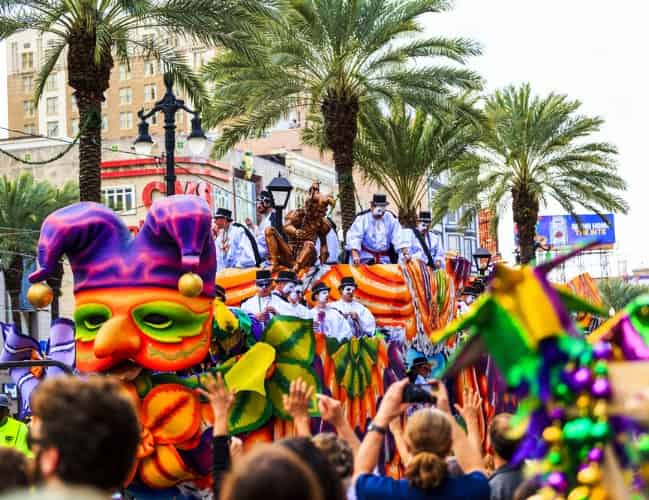
A krewe is a private organization that organizes a parade or Mardi Gras event. Each krewe has its own theme, floats, costumes, and signature throws (the beads, cups, and trinkets tossed from floats). Some krewes are massive, high-production spectacles. Others are artistic, satirical, or delightfully weird — and that contrast is part of what makes Mardi Gras so unforgettable. Catching at least one of these is a must.
Famous Krewes You’ll Hear About
These are some of the biggest names in the season:
-
Endymion – huge floats and legendary throws
-
Bacchus – celebrity monarchs and crowd favorites
-
Orpheus – sleek, high-production parades
-
Zulu – famous for hand-painted coconuts and deep cultural roots
-
Rex – the classic symbol of traditional Mardi Gras royalty
Where to Watch Mardi Gras Parades
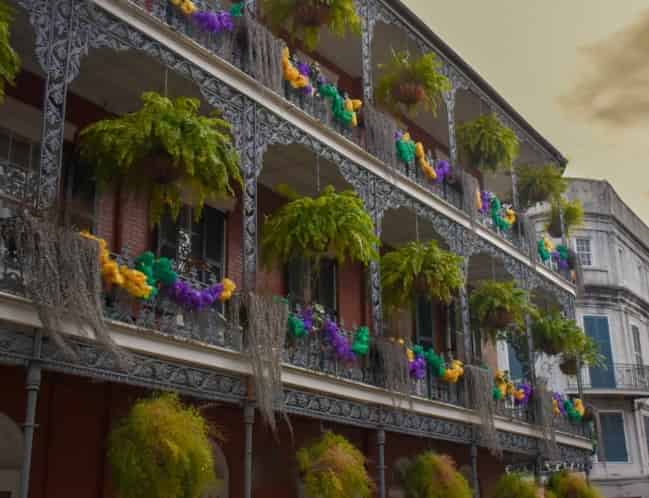
Despite what movies set in New Orleans suggest, Bourbon Street is not where most Mardi Gras parades roll.
Best Areas for Parade Viewing
-
Uptown – classic neighborhood vibes with lots of space
-
St. Charles Avenue – tree-lined streets, streetcars, and some of the best parade access in the city
-
Mid-City – lively, local, and slightly less crowded
-
Central Business District – closer to downtown hotels and nightlife
These areas offer more room, better float access, and a more authentic Mardi Gras atmosphere. St. Charles Avenue is especially popular thanks to its beautiful setting and easy access to multiple parade routes. If you want great throws and a less chaotic experience, this is where you want to be.
Best Areas for Party-Focused Mardi Gras
Now, conversely, if packed crowds, loud music, bead-throwing mayhem, and late-night party energy are what you’re after, head straight to:
-
Bourbon Street – wall-to-wall people, balconies, and nonstop partying
-
Frenchmen Street – live music, dancing, and a more artsy party crowd
-
The French Quarter – especially after dark, when the parades end and the street party begins
This is where Mardi Gras turns into an all-night festival — wild, crowded, and unforgettable. Just know that it’s much less about watching parades and much more about soaking up the party.
Free vs. Paid Parade Viewing
Most people watch Mardi Gras parades for free, but there are also paid viewing options that can make the experience a lot more comfortable.
Here’s the difference:
Free Parade Viewing
-
Stand along the parade route (especially Uptown, St. Charles, or Mid-City)
-
Get great throws if you arrive early
-
More flexible and totally free
-
Requires more waiting, standing, and crowd-jockeying
Paid Parade Viewing
-
Rooftop parties, balconies, parade stands, or private courtyards
-
Usually includes drinks, bathrooms, and guaranteed space
-
No need to arrive hours early to claim a spot
-
Great for first-timers, families, or anyone who wants a more relaxed experience
If you’re visiting New Orleans for Mardi Gras for the first time, booking at least one paid viewing experience can be a game-changer — especially during the biggest parade days.
What to Wear to Mardi Gras
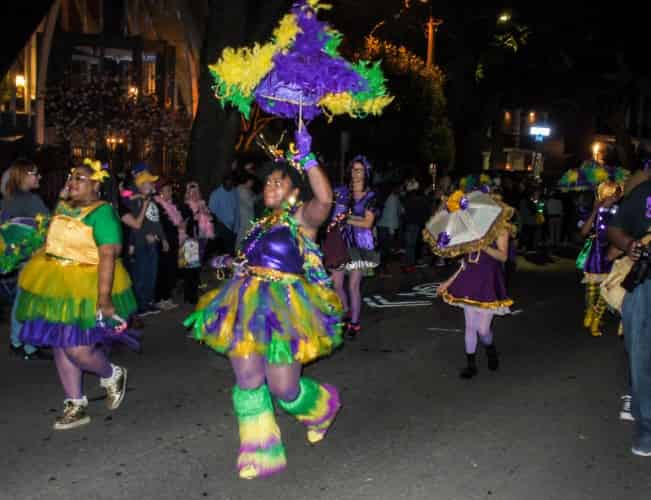
Mardi Gras fashion is all about having fun. You’ll see sequins, feathers, masks, costumes, and plenty of purple, green, and gold. You don’t need a full costume, but wearing something festive makes the experience way more fun.
Here’s how to dress smart and still look the part:
-
Wear comfortable, closed-toe shoes. You’ll be walking, standing, and dancing for hours — sneakers or cushioned boots are your best friend.
-
Dress in layers. February weather can change quickly, so a light jacket or hoodie is clutch.
-
Choose clothes you don’t mind getting messy. Drinks spill, beads fly, and streets get… festive.
-
Go hands-free. A crossbody bag or small backpack makes it easier to catch throws and move through crowds.
-
Add one bold Mardi Gras piece. A funky hat, sparkly jacket, feather boa, mask, or colorful wig instantly levels up your outfit.
If you’re comfortable, colorful, and a little bit glittery by the end of the day, you nailed it.
Mardi Gras Traditions to Know
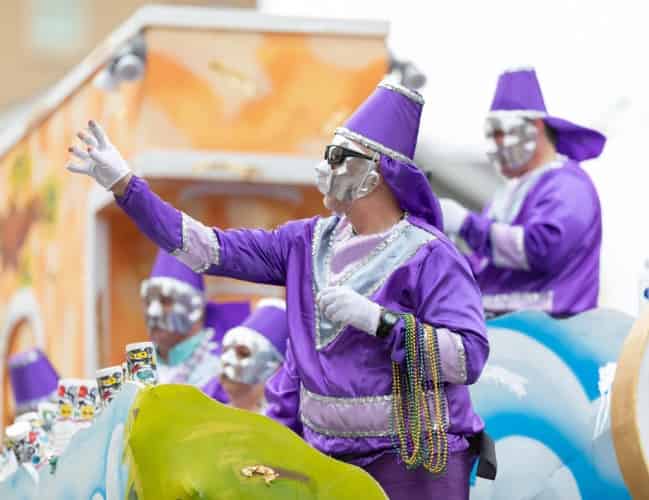
Mardi Gras comes with its own language, symbols, and rituals — and knowing a few of them makes the whole experience way more fun.
The Colors
Purple, green, and gold aren’t just decoration. Each color has meaning:
-
Purple represents justice
-
Green represents faith
-
Gold represents power
You’ll see these colors everywhere — on beads, floats, costumes, king cakes, and even street decorations.
Throws
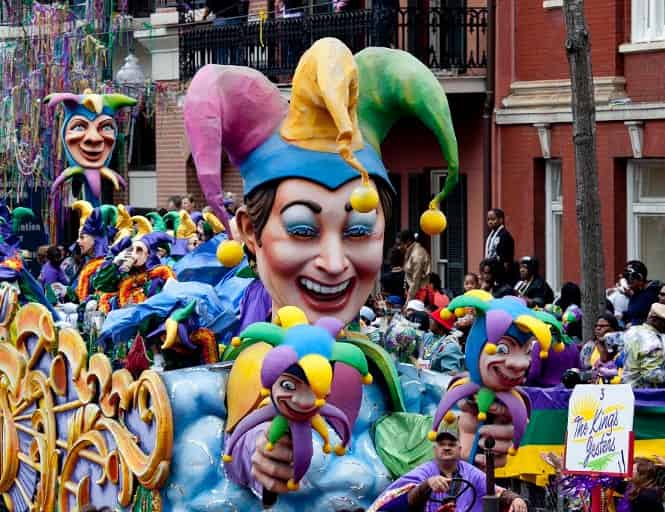
“Throws” are the beads, cups, doubloons, stuffed animals, and trinkets tossed from parade floats into the crowd. Catching them is half the fun. If you want better throws, make eye contact with float riders, wave, smile, or hold up a creative sign — it really works. Some krewes throw specialty items that people treasure for years, so don’t be surprised if the crowd goes wild when something unique comes flying through the air.
King Cake
This iconic Mardi Gras dessert is a cinnamon-filled pastry topped with purple, green, and gold icing. Inside is a tiny plastic baby — and whoever finds it is responsible for buying the next king cake or hosting the next party. Yes, people take this very seriously. Very.
Mardi Gras Indians
Mardi Gras Indians are one of the most powerful and unique traditions in New Orleans. These groups create elaborate, hand-sewn suits covered in beads, feathers, and rhinestones, inspired by Native American regalia and honoring Indigenous tribes who helped enslaved people escape in the 1700s.
They don’t ride on floats — they walk the streets, chanting and drumming, turning neighborhoods into living art galleries. Seeing a Mardi Gras Indian “tribe” in person is one of the most unforgettable parts of the season.
Zulu Coconuts
One of the most famous Mardi Gras throws is the Zulu coconut — a hand-decorated coconut tossed by the Zulu Social Aid & Pleasure Club during their parade on Mardi Gras Day. They’re rare, collectible, and wildly coveted. People still proudly display their Zulu coconuts decades later like sacred Mardi Gras trophies. Catching one is basically winning the Super Bowl of throws.
What to Do Between Mardi Gras Parades
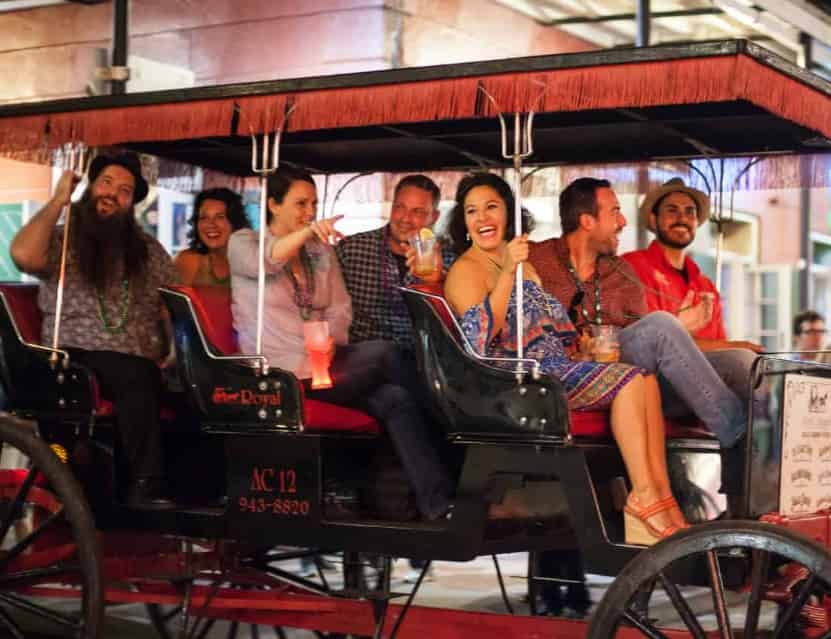
Parades don’t run all day, which means there’s plenty of time to explore the rest of New Orleans — and this is where your trip really levels up.
Many visitors use mornings and afternoons to book experiences like:
One of the biggest mistakes visitors make is focusing only on Mardi Gras. New Orleans is packed with history, music, food, and culture — and it’s also one of the most famously haunted cities in the country. If you love the eerie, mysterious side of the city, you’ll probably also love Halloween in New Orleans, when ghost tours, haunted history, and spooky traditions take over the French Quarter in a way that rivals Mardi Gras for atmosphere.
Booking a few New Orleans tours or experiences in advance helps balance the wild celebration with moments that turn your trip into something truly unforgettable.
Mardi Gras in New Orleans: FAQ
Is Mardi Gras safe?
Mardi Gras is generally safe, but it is crowded, loud, and high-energy. Stick with your group, stay in well-lit areas, keep your phone charged, and always have a plan for getting home. Using rideshares, streetcars, or staying near your parade route makes everything easier. Most problems happen when people drink too much and wander off alone, especially late at night. Treat Mardi Gras like any big festival: pace yourself, watch your belongings, and trust your instincts — and you’ll have an amazing time.
Is Mardi Gras family-friendly?
Yes — if you go to the right areas. Uptown and St. Charles Avenue are popular with families thanks to their calmer crowds, daytime parades, and kid-friendly atmosphere. The French Quarter and Bourbon Street are much more adult-focused, especially at night.
Do I need tickets to watch Mardi Gras parades?
No. All parades are free to watch along the route. Tickets are only needed if you want reserved seating, a rooftop party, or balcony access with amenities like drinks and bathrooms.
How early should I arrive to get a good parade spot?
For the biggest parades, people start claiming spots two to four hours early, especially along St. Charles Avenue. Smaller parades and Mid-City routes usually require less waiting time.
Can I still book tours during Mardi Gras?
Absolutely. Many visitors use mornings, afternoons, and non-parade days to book ghost tours, swamp tours, food tours, and river cruises. These are a great way to experience New Orleans when parades aren’t happening.
Is Mardi Gras canceled if it rains?
Rain rarely stops Mardi Gras. Parades may be delayed or slightly adjusted, but they usually roll unless there’s severe weather.
What’s the best area to stay during Mardi Gras?
Uptown, the Central Business District, and areas near St. Charles Avenue are popular because they offer easy parade access without being in the heart of the French Quarter chaos.
Do restaurants and attractions stay open during Mardi Gras?
Most do — especially in the French Quarter and tourist areas. Some businesses close on Mardi Gras Day itself, but the days leading up to it are packed with open restaurants, bars, and tours.
Is it better to plan ahead or go with the flow?
A mix of both works best. Parade watching is spontaneous, but booking tours, cruises, or special experiences ahead of time helps you make the most of the time between parades — and TripShock can help.
Is Mardi Gras Worth It?
Absolutely. Mardi Gras is one of the few events in the U.S. that still feels completely authentic, wonderfully weird, and joyfully over-the-top. It’s not polished or corporate — it’s a city throwing itself a party and inviting the whole world to join in.
If you’ve ever thought about going, this is your sign.
About the Author

- When Is Mardi Gras in New Orleans?
- Mardi Gras 2026 Dates at a Glance
- What Is a Mardi Gras “Krewe”?
- Famous Krewes You’ll Hear About
- Where to Watch Mardi Gras Parades
- Best Areas for Parade Viewing
- Best Areas for Party-Focused Mardi Gras
- Free vs. Paid Parade Viewing
- Free Parade Viewing
- Paid Parade Viewing
- What to Wear to Mardi Gras
- Mardi Gras Traditions to Know
- The Colors
- Throws
- King Cake
- Mardi Gras Indians
- Zulu Coconuts
- What to Do Between Mardi Gras Parades
- Mardi Gras in New Orleans: FAQ
- Is Mardi Gras Worth It?